
Play Book of Dead Now!
Home → Strategy
Book of Dead Strategy
Approaching Book of Dead sensibly
The developer Play'n GO released the slot Book of Dead in 2016, establishing a specific mathematical model for high-volatility gameplay that defines its long-term behavior. This title features a theoretical RTP of 96.21%, which represents the expected return over hundreds of thousands of spins rather than any single session outcome. Players must understand this percentage indicates a house edge of 3.79%, meaning the casino retains a fixed portion of all wagers placed on this game.
While Book of Dead offers an RTP of 96.21%, other configurations like 84.18% exist due to operator settings, creating significant variance in potential returns across different platforms. Reactoonz by Play'n GO provides a higher RTP of 96.51%, showing that even within the same studio, mathematical models differ substantially between distinct titles. Gamblers should verify the specific RTP version before playing, as lower percentages drastically reduce the expected value of every euro wagered on the reels.
The maximum win cap stands at 5000x the stake, limiting the largest possible payout regardless of how many times the expanding wild symbol triggers during free spins. This ceiling applies strictly to Book of Dead and prevents infinite growth of winnings, unlike some progressive jackpot games that offer uncapped prize pools. Understanding this limit helps players manage expectations, as hitting the top prize requires aligning multiple high-value symbols during the bonus round feature.
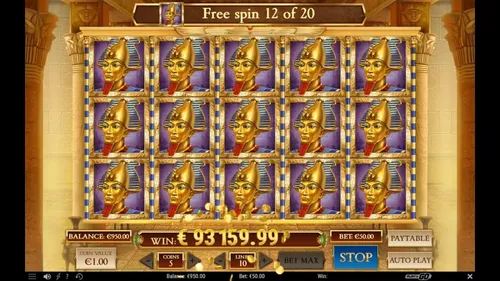
Bankroll rules that hold up
A bankroll must cover at least one thousand spins to withstand the high volatility inherent in Book of Dead, ensuring funds do not deplete during dry streaks. With a minimum bet of €0.10 per spin, a player needs a starting balance of €100 to achieve this baseline durability against random loss sequences. This rule protects the gambler from early ruin, allowing enough time for the theoretical RTP of 96.21% to potentially manifest over the long run.
Flat betting involves staking the same amount every round, which preserves the built-in house edge without accelerating the rate of fund depletion compared to variable strategies. Progressive staking raises stakes after losses, a method that does not change the underlying math but significantly shortens the time to ruin for the player. Maintaining a flat stake of €0.50 or higher allows the bankroll to absorb the frequent small losses typical of high-variance slots like Book of Dead.
The bonus terms include a 300% welcome bonus up to €2,000 plus 100 free spins, which can extend playtime if the wagering requirements are met through steady betting. Using this extra capital requires careful management, as the bonus funds often carry strict turnover conditions that demand a high volume of spins to unlock withdrawals. Players should calculate whether their chosen bet size aligns with these requirements, ensuring they do not exhaust their own money before clearing the bonus.
Bet sizing against volatility
Book of Dead operates with high volatility, meaning payouts are infrequent but potentially large, requiring bet sizes that match the player's risk tolerance and available funds. The reel layout consists of five reels and three rows with ten paylines, offering a structured way to place bets ranging from €0.10 to €50 per spin. Larger bets increase the absolute value of wins but also accelerate the drain on the bankroll during the inevitable losing streaks characteristic of this volatility profile.
When comparing Book of Dead to Reactoonz, which uses a 7x7 grid and also features high volatility, the bet sizing strategy must account for different payout structures and hit frequencies. Reactoonz has an RTP of 96.51%, slightly higher than Book of Dead's 96.21%, suggesting that smaller, more frequent wins might occur more often in the former. Players should adjust their stake accordingly, recognizing that Book of Dead's 5000x max win requires enduring longer periods of zero returns compared to grid-based cluster pays.
The gamble round feature allows players to risk winnings on card color or suit, effectively doubling the bet size for that round if successful, but failing resets the gain. This optional mechanic introduces additional variance, as a single incorrect guess can erase profits from several winning spins, impacting the overall bankroll sustainability. Setting a strict limit on how often to use the gamble feature helps maintain control over the bankroll, preventing rapid depletion during hot streaks.
Session limits worth setting
Setting a time limit for each session prevents fatigue-induced errors, especially when playing Book of Dead, where the expanding wild feature can create intense moments of engagement. A two-hour session typically involves approximately seven hundred twenty spins at a moderate pace, exposing the player to the statistical reality of the 3.79% house edge. This duration balances entertainment value with financial safety, ensuring that losses remain within acceptable bounds defined by the initial bankroll allocation.
The maximum win of 5000x represents a theoretical peak that is rarely reached, so setting a profit target well below this cap ensures consistent withdrawal of winnings. For instance, aiming for a 50x return on the total bet amount provides a realistic goal that acknowledges the high volatility without chasing improbable jackpots. This disciplined approach contrasts with reactive gambling, where players continue spinning in hope of hitting the elusive top prize after experiencing a series of losses.
Wagering requirements associated with bonuses, such as the 300% match up to €2,000, impose strict timeframes for completing turnover, necessitating precise session planning to meet these deadlines. If the wagering requirement is x40, a €100 bonus requires €4,000 in total bets, which could take many hours depending on the stake size chosen. Players must calculate the necessary spin count to clear these requirements, avoiding penalties for incomplete turnover while maintaining control over their spending habits.
Why chasing losses fails
Chasing losses in Book of Dead is futile because the high volatility ensures that recovery is unlikely during short sessions, regardless of increased bet sizes or frequency. Each spin is an independent event with a fixed probability, meaning previous outcomes do not influence future results, making the concept of 'due' wins mathematically invalid. Increasing stakes to recover lost funds only accelerates the depletion of the bankroll, leading to faster ruin rather than the hoped-for breakthrough win.
The house edge of 3.79% applies uniformly to every spin, so no betting system can overcome this built-in advantage over the long term, even with progressive staking strategies. Reactoonz shares similar high volatility traits, yet its higher RTP of 96.51% still guarantees a negative expectation for the player, proving that chasing losses is ineffective across different titles. Players who attempt to win back losses often exceed their predetermined limits, turning a manageable deficit into a significant financial error driven by emotion rather than logic.
The 10 free spins feature with random expanding symbols offers a chance for substantial payouts, but relying on this bonus round to fix prior losses is a dangerous misconception. Since the trigger probability is fixed, forcing more spins to find the feature does not increase the likelihood of its appearance, only the exposure to the house edge. Accepting losses as part of the cost of entertainment preserves the bankroll for future sessions, whereas chasing leads to irreversible damage and potential addiction risks.
Book of Dead: key facts
| Parameter | Value |
|---|---|
| Game | Book of Dead |
| Studio | Play'n GO |
| Released | 2016 |
| RTP | 96.21% |
| House edge | 3.79% |
| Volatility | high |
| Max win | 5000x |
| Reels | 5x3 |
| Paylines / ways | 10 |
| Bet range | €0.10 – €50 |
Common systems and their limits
The Book of Dead slot by Play'n GO operates on a fixed 96.21% theoretical return, meaning the house retains 3.79% over millions of spins. This mathematical edge remains constant regardless of betting patterns or streak outcomes observed during gameplay sessions. Players cannot alter this percentage through strategy, as the random number generator ensures each spin is independent of previous results.
Legacy of Dead shares the same 5000x maximum win cap and high volatility profile as the original title from Play'n GO. Both games utilize identical reel structures and feature sets, yet their RTP values differ slightly at 96.58% versus 96.21%. This comparison highlights how minor developer adjustments impact long-term returns without changing core mechanics or payout frequencies for users.
Flat betting explained
Flat betting involves wagering the minimum €0.10 stake per spin across all 10 active paylines in the Book of Dead game. This approach extends bankroll longevity compared to higher stakes, allowing players to endure the high volatility inherent in Play'n GO titles. Consistent low stakes reduce variance impact while maintaining eligibility for the expanding wild features and free spin triggers.
Progressive staking risks
Increasing bets after losses does not overcome the 3.79% house edge built into the 96.21% RTP configuration of Book of Dead. Progressive staking strategies accelerate bankroll depletion because they increase exposure during losing streaks without altering the underlying mathematical probability. The maximum 5000x win cap remains unreachable if funds are exhausted before triggering the bonus round with its ten free spins.
What the maths actually allows
Theoretical returns of 96.21% for Book of Dead indicate expected payouts over extended play rather than guaranteed session results. Operators may configure lower RTP versions at 94.25%, 91.25%, 87.25%, or 84.18%, affecting actual player value significantly. These variations demonstrate that published percentages do not reflect every instance, requiring awareness of operator-specific settings when assessing potential returns.
Reading variance honestly
High volatility in Book of Dead means infrequent wins but potential for large payouts up to 5000x the total bet amount. Players must maintain sufficient bankrolls to survive dry spells between hitting the scatter symbol or triggering the gamble round feature. Understanding this distribution prevents frustration during periods where no expanding wilds appear on any of the five reels.
Learning the game in demo first
Play'n GO released Book of Dead in 2016 as a high volatility slot with a theoretical RTP of 96.21%. This specific percentage represents the long-term return over hundreds of thousands of spins, contrasting sharply with lower operator-configurable versions like 84.18% or 87.25%. Players must understand that this mathematical edge defines the house advantage rather than guaranteeing short-term session results.
The game features a standard 5x3 reel layout with exactly 10 fixed paylines for winning combinations. This structure allows players to track payouts clearly across the five visible reels without complex way mechanics. The expanding wild scatter symbol triggers the core bonus round when three or more appear anywhere on the grid during base play.
Tome of Madness by Play'n GO offers a different structural approach with its 5x5 reel setup and higher volatility profile. Comparing these layouts helps players recognize how Book of Dead's 10-payline system influences hit frequency compared to wider grids. Understanding these mechanical differences ensures informed decisions before committing real funds to either title.
Adjusting stakes to your budget
Book of Dead supports a bet range from €0.10 to €50 per spin, accommodating various bankroll sizes. Setting a stake at the minimum €0.10 extends playtime significantly compared to max betting, though it reduces potential win magnitude. Flat betting at this low level minimizes variance exposure while allowing the theoretical RTP of 96.21% to stabilize over time.
Progressive staking strategies involve raising stakes after losses, which does not change the built-in house edge of 3.79%. Increasing bets to recover deficits only accelerates bankroll depletion without improving the underlying mathematical expectation of the slot machine. Sustainable play requires sticking to consistent wager amounts regardless of recent outcome history or perceived streaks.
High volatility means wins occur less frequently but carry larger multipliers, such as the maximum win cap of 5000x. Players should adjust their initial deposit size to withstand dry spells inherent in this specific volatility classification. Allocating sufficient funds ensures survival through losing sequences before potentially triggering the lucrative free spins feature.
Recognising a bad session
A session becomes statistically unfavorable when the actual return diverges significantly from the expected RTP of 96.21%. If losses accumulate rapidly despite correct strategy adherence, the variance has simply exceeded normal distribution parameters for high volatility slots. Tracking total spins versus balance changes reveals whether outcomes align with the theoretical long-run average.
Triggering the gamble round after free spins involves risking existing winnings on card color or suit predictions. This optional feature carries additional risk since no guaranteed return exists beyond the base free spin payout. Accepting losses here prevents chasing further gains that contradict responsible bankroll management principles established initially.
Tome of Madness presents a different risk profile with its 2000x max win limit compared to Book of Dead's 5000x cap. Observing how often each game hits near its maximum potential helps identify if current sessions are experiencing abnormal variance. Recognizing these statistical boundaries allows players to exit before emotional decision-making compromises their remaining funds.
Stopping while ahead
Reaching the maximum win of 5000x represents the highest possible payout multiplier available within Book of Dead's mathematical model. Securing profits at this threshold preserves capital against subsequent negative variance that inevitably follows any successful gambling session. Cashing out immediately after achieving this peak prevents re-entering the house edge environment unnecessarily.
The 10 free spins feature with random expanding symbols offers significant winning potential during the bonus round activation. Players should evaluate accumulated bonus winnings against their original deposit before continuing base game play. Exiting after securing substantial bonus gains ensures the session remains profitable relative to the initial financial commitment made.
Comparing this ceiling to Tome of Madness highlights how Book of Dead's 5000x cap provides greater upside potential. However, higher maximum wins also correlate with increased volatility requiring stricter discipline during profit-taking phases. Establishing predefined exit points based on multiplier achievements protects accumulated value from being eroded by prolonged play.
Responsible play in practice
Bankroll management dictates setting aside a fixed amount of money strictly designated for playing Book of Dead sessions. This financial boundary prevents mixing essential living expenses with entertainment funds, ensuring sustainable engagement with the slot over time. Adhering to predetermined limits mitigates the psychological impact of inevitable losing streaks associated with high volatility games.
The house edge of 3.79% ensures that operators maintain a mathematical advantage over extended play periods averaging 96.21% returns. Recognizing this permanent structural benefit prevents unrealistic expectations about overcoming the casino's built-in profitability through skill or timing. Accepting this reality promotes healthier attitudes toward gambling as paid entertainment rather than income generation.
Bonus terms like a 300% welcome bonus up to €2,000 plus 100 free spins introduce additional wagering requirements. These promotional conditions often restrict immediate withdrawal eligibility until specific turnover thresholds are met using bonus funds. Understanding these contractual obligations prevents frustration when attempting to cash out winnings derived from initial promotional credits.
DemoRTP & VolatilitySymbols & PayoutsBonus FeaturesStrategyBonusesMobileDownload & AppMax WinSimilar GamesReviewFAQSitemap
Book of Dead 2026